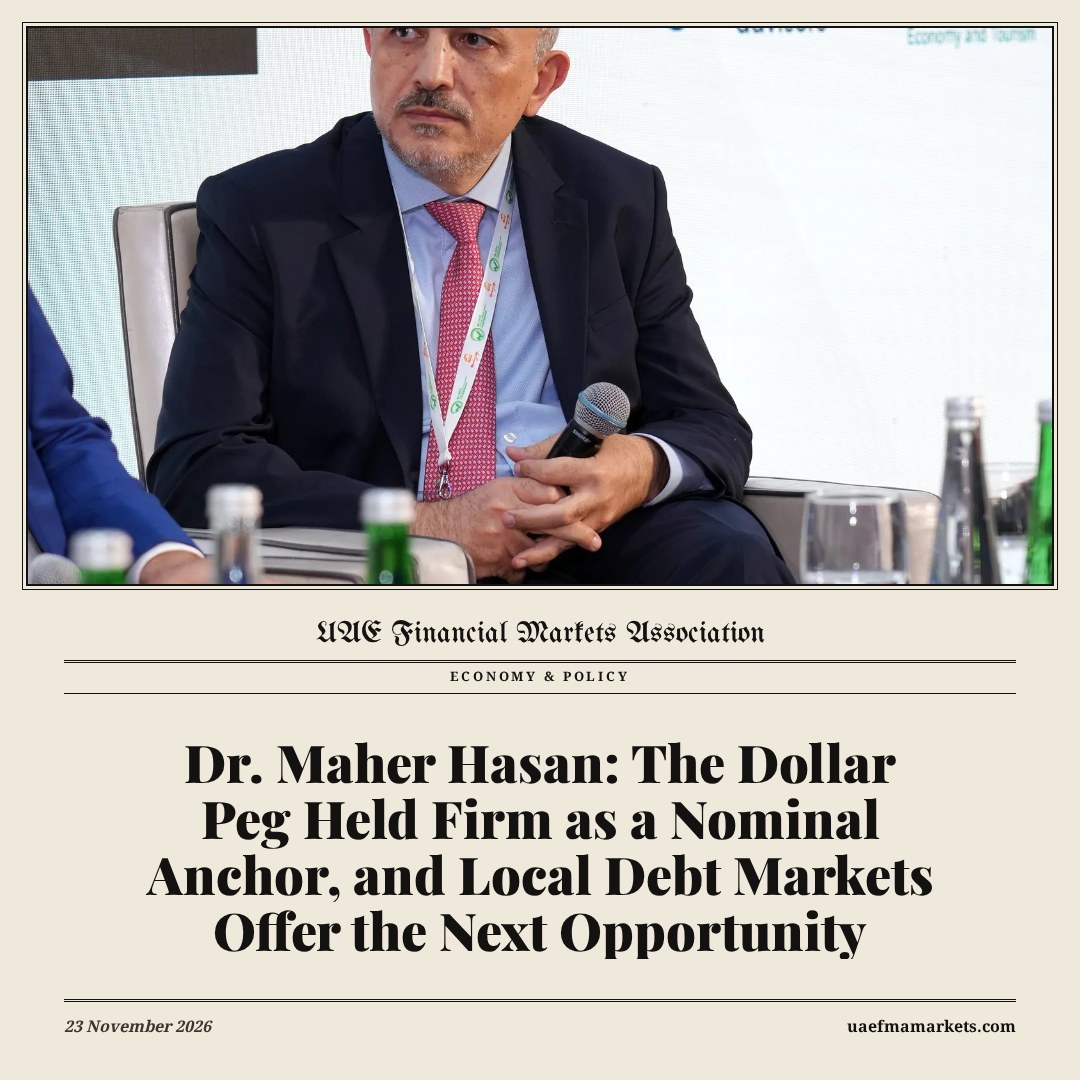
Dr. Maher Hasan: The Dollar Peg Held Firm as a Nominal Anchor, and Local Debt Markets Offer the Next Opportunity
Former central bank vice governor Dr. Maher Hasan told GCC FMT 2026 that currency pegs, fiscal buffers and sovereign wealth funds kept confidence in the Gulf, and urged treasurers to prepare for more local borrowing.
 By UAEFMA Editorial Team
Dubai, November 23, 2026 3 min read
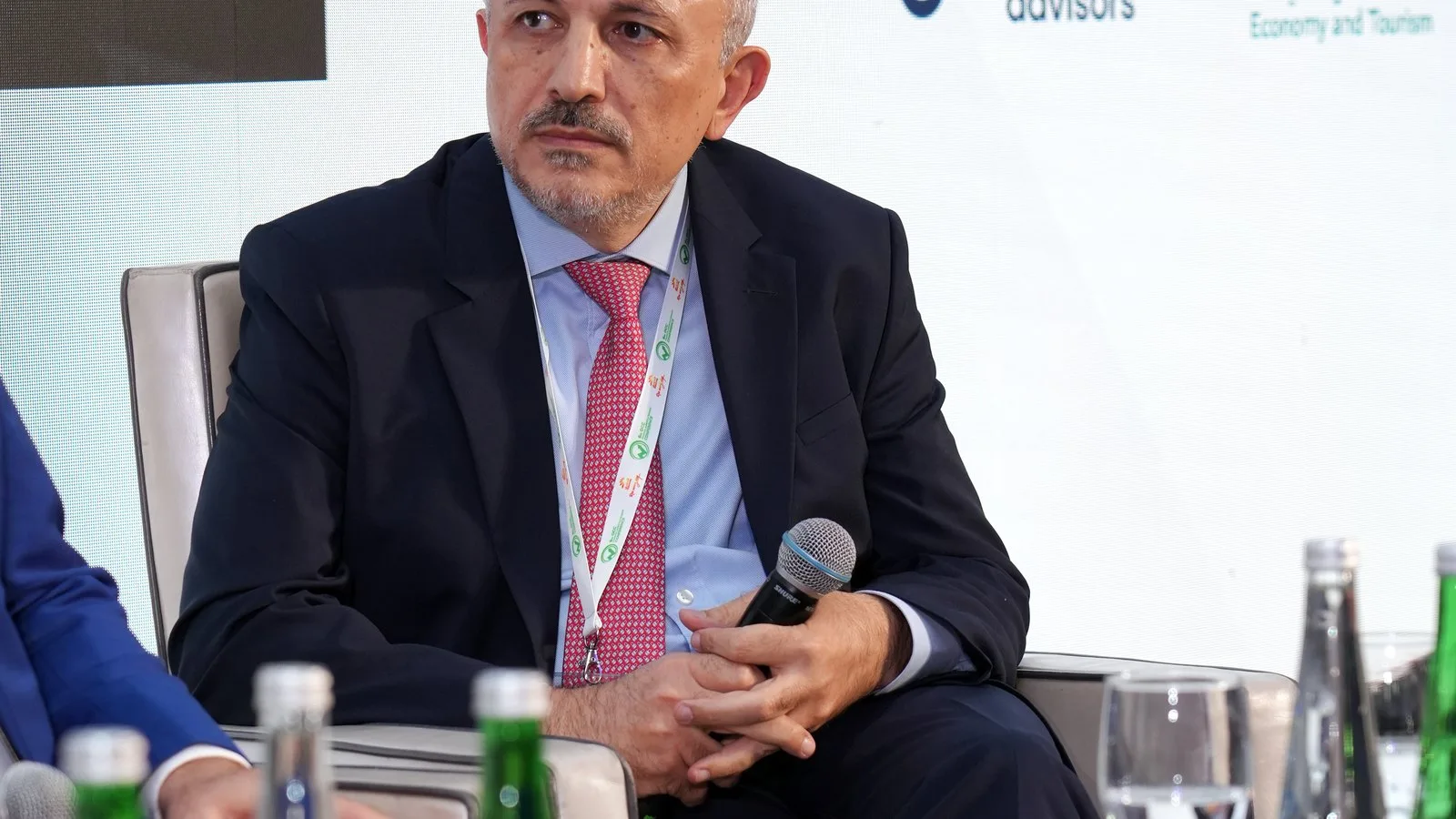
"The dollar peg also provided the objective of nominal anchor. We did not see actually any speculation on the peg or on the currencies." That was the assessment of Dr. Maher Hasan, CEO of Abu Dhabi-based Macroeconomic and Financial Advisory, at the 6th GCC Financial Markets & Treasury Conference (GCC FMT 2026) in Dubai.
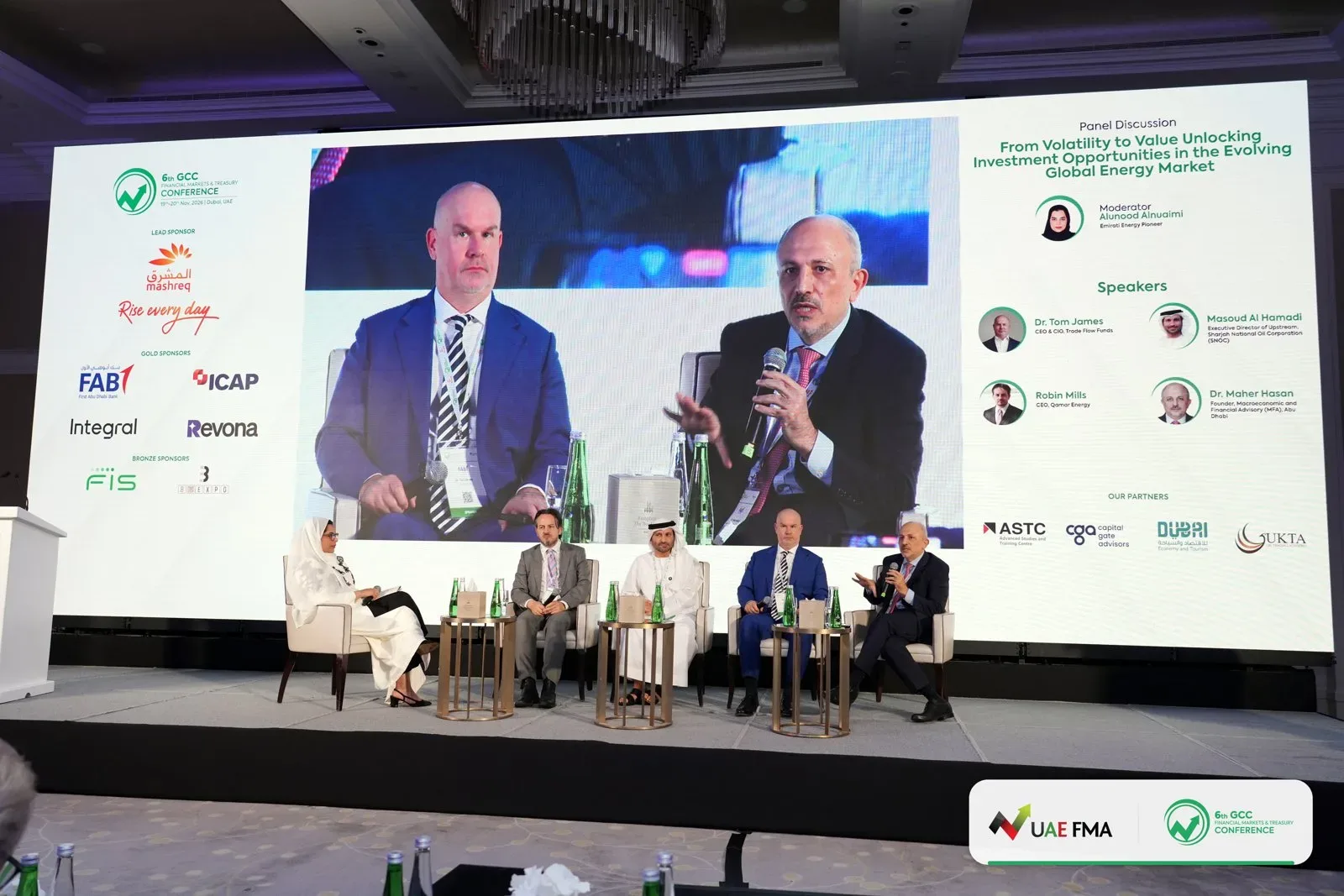
Dr. Hasan, a former chief economist at the Arab Monetary Fund, former vice governor of the Central Bank of Jordan and former deputy division chief at the IMF's Monetary and Capital Markets Department, spoke on the energy markets panel "From Volatility to Value". He said Gulf policy tools had "done their role" this year: fiscal buffers kept government spending going and the economy "running relatively well", while interest rates in GCC countries stayed close to dollar rates, "so the risk premium remained very low."
Sovereign wealth as a second line
Sovereign wealth funds, Dr. Hasan said, are seen by markets as a second level of protection beyond central bank reserves, giving assurance that the region can withstand a long period of pressure. "In general, it kept the confidence in the region."

Looking ahead, he called for governments, sovereign wealth funds and central banks to rebuild buffers once conditions normalise, and saw "an excellent opportunity for coordinating across the GCC countries" on energy infrastructure such as pipelines and storage capacity.
What treasurers should do now
For treasurers, Dr. Hasan's message was to prepare for opportunity. "We're going to see more borrowing in the coming period, both from the public sector and the private sector. And when you have sufficient liquidity, you will have the chance to participate in these opportunities." He noted that when governments borrow in foreign currency and sell it to the central bank, the proceeds eventually feed local liquidity.
He urged institutions to keep larger and more diversified liquidity buffers, review their credit lines, and hedge for volatility in both directions, in oil prices and interest rates. His practical takeaway for CFOs was to run combined stress tests over 60 to 90 days, based on plausible scenarios, "to see how resilient the bank or the financial institution is".
"In terms of opportunity," he concluded, "there is a huge opportunity" in the local debt market, as well as in financing more resilient energy infrastructure.
UAEFMA Editorial Team
The newsroom of UAEFMA Markets, the news service of the UAE Financial Markets Association, covering UAE banking, treasury, capital markets and fintech.