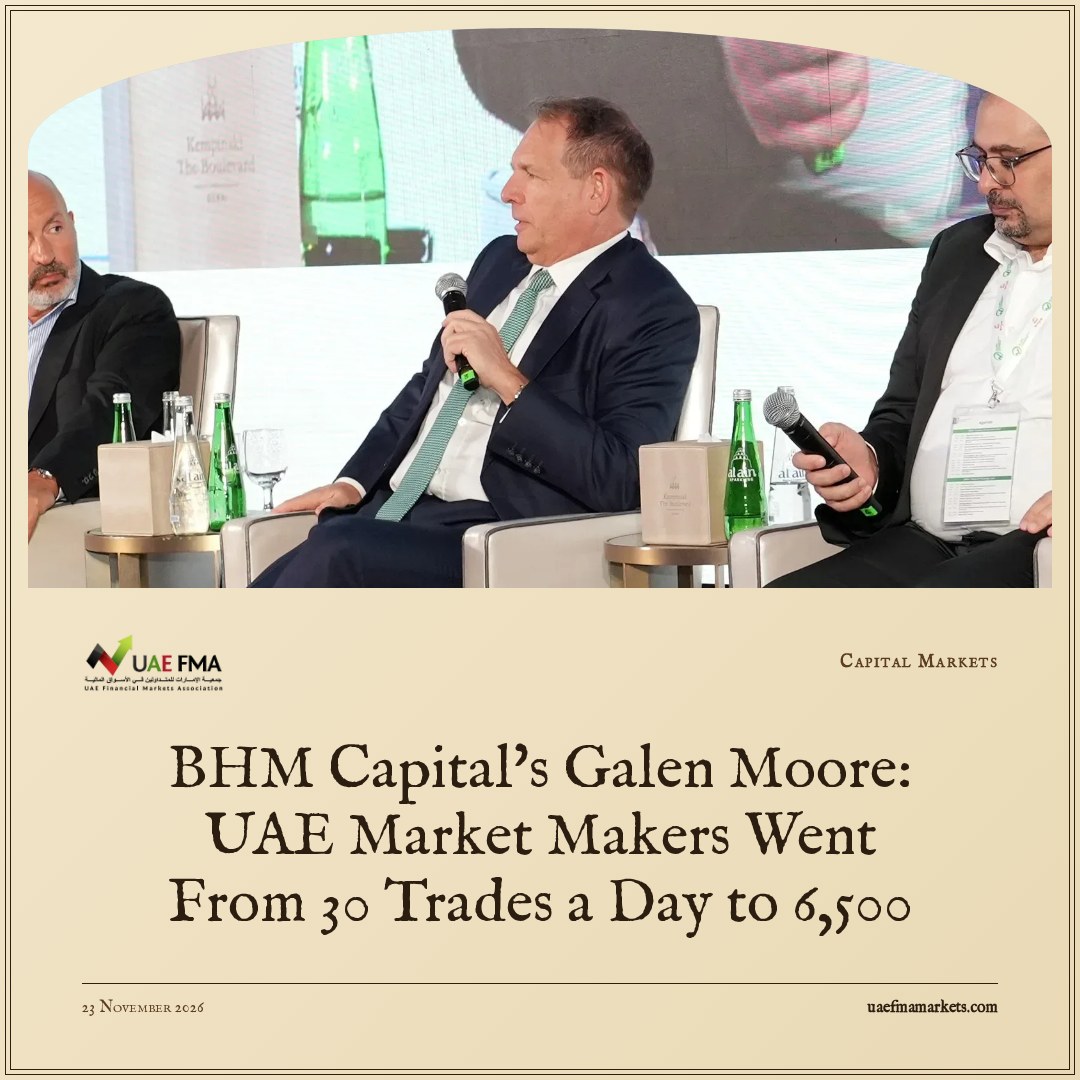
BHM Capital's Galen Moore: UAE Market Makers Went From 30 Trades a Day to 6,500
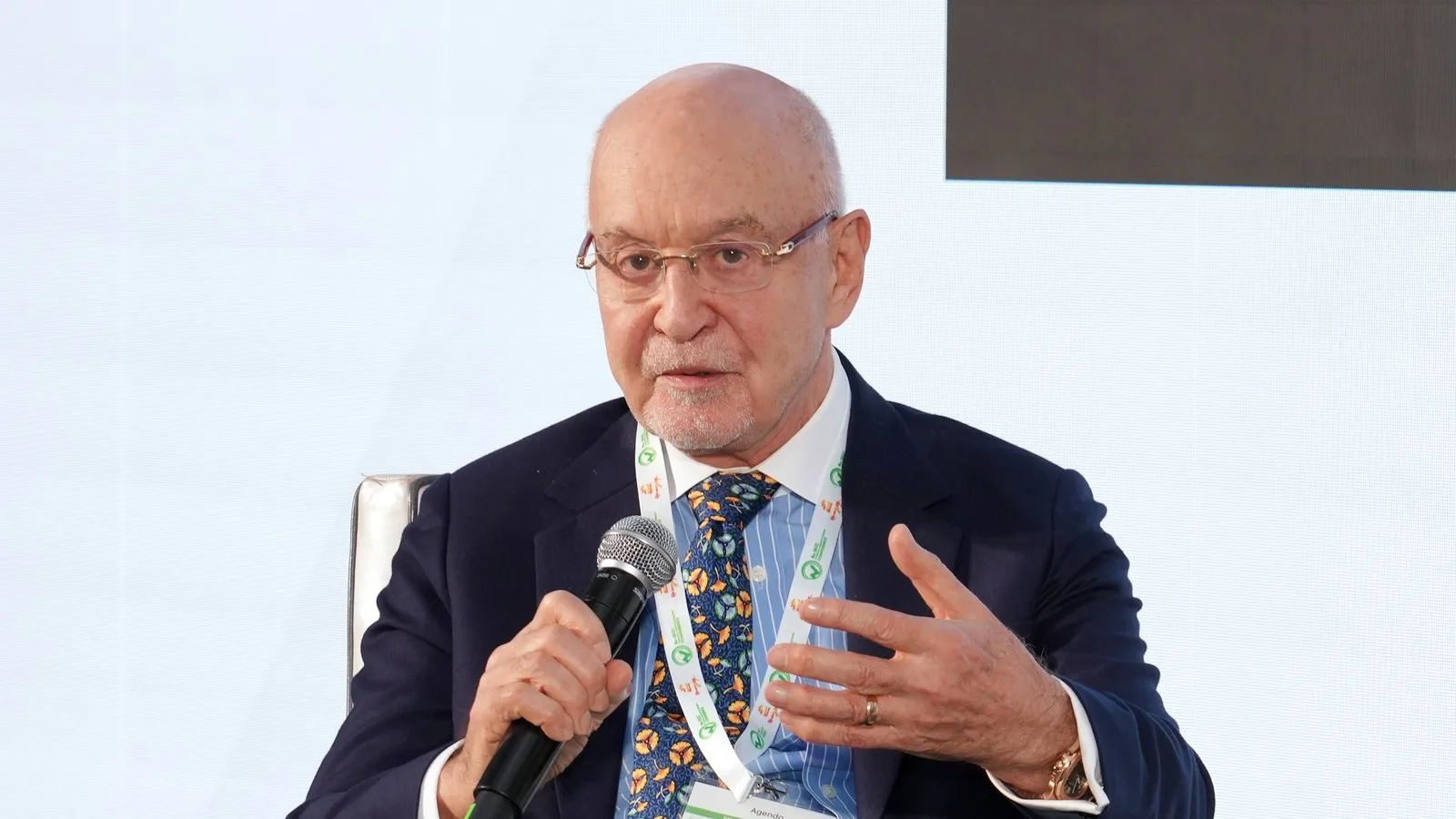
Galen Moore, Head of Liquidity and Market Making at BHM Capital, told GCC FMT 2026 that market making on ADX and DFM is a success story, with market makers now accounting for about 15–20% of total turnover.
 By UAEFMA Editorial Team
· · 3 min read
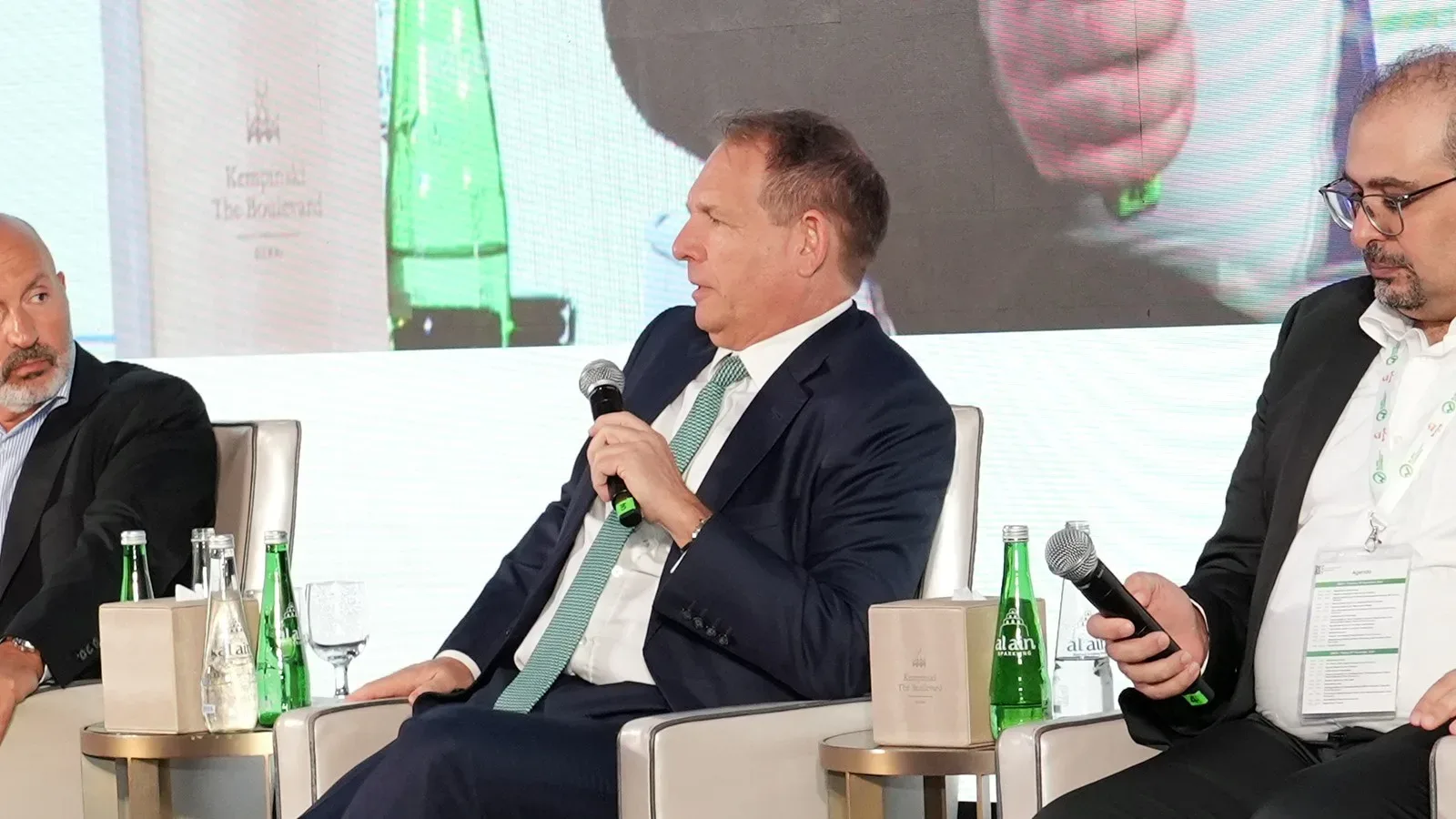
"When we first started market making on the ADX and DFM, a busy day for us would be if we traded 30 times. A busy day now is if we do six, six and a half thousand trades." That was how Galen Moore, Head of Liquidity and Market Making at BHM Capital, described the growth of UAE market making at the 6th GCC Financial Markets & Treasury Conference (GCC FMT 2026) in Dubai.
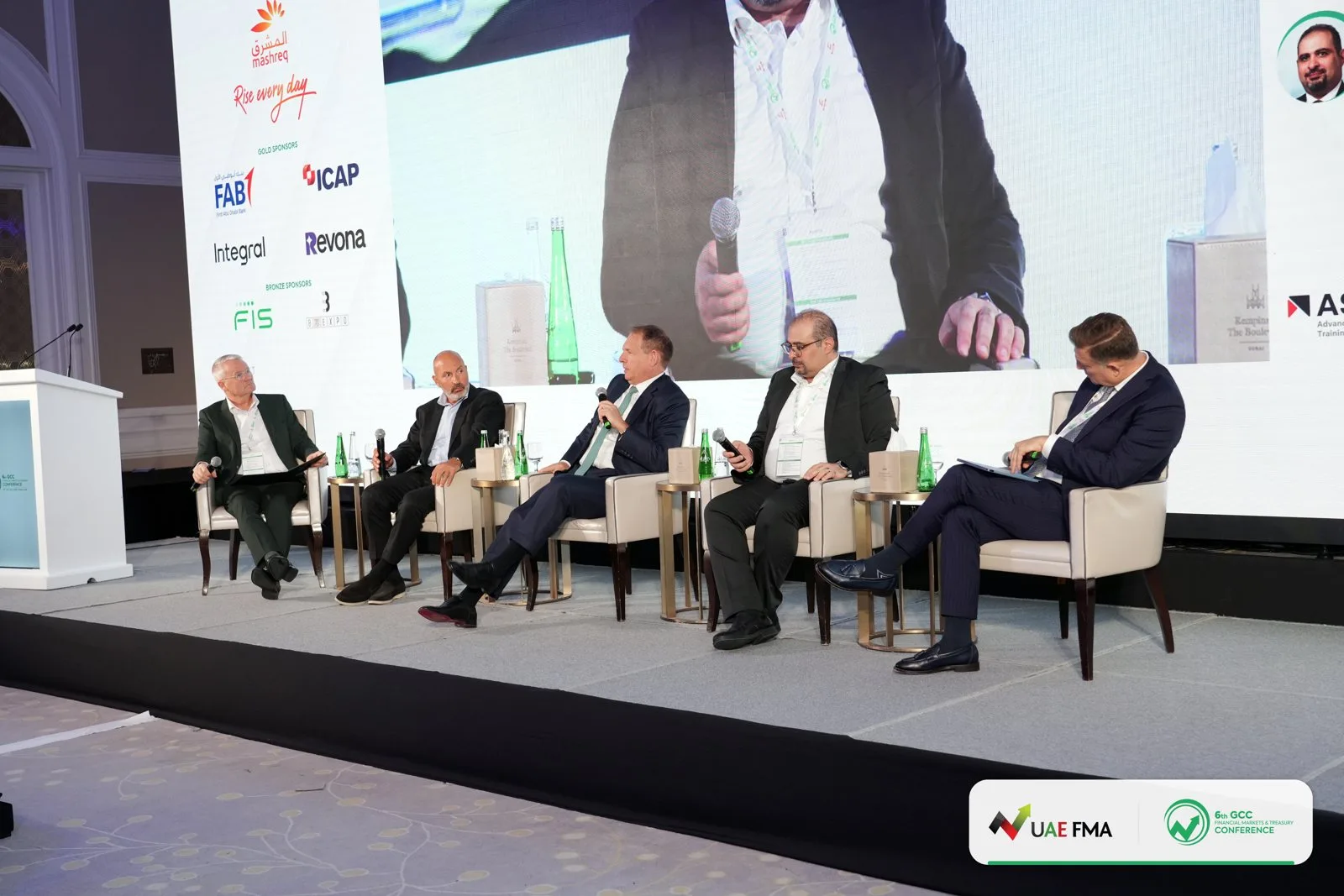
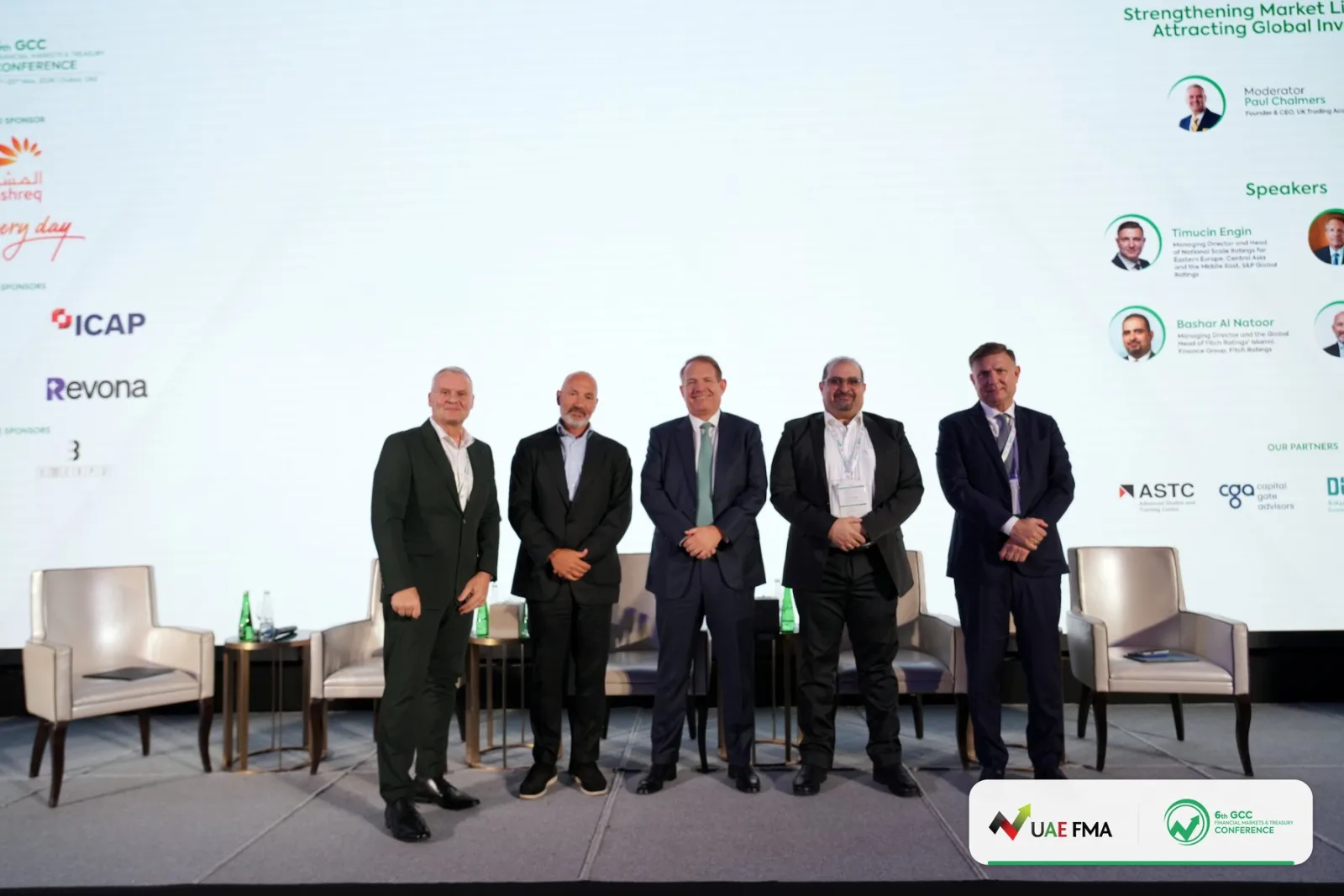
Speaking on the panel on Strengthening Market Liquidity and Attracting Global Investors, moderated by Paul Chalmers, Moore said market making was introduced more than ten years ago by the Securities and Commodities Authority (SCA), and that he implemented it at First Abu Dhabi Bank in 2013. As technology and algorithms improved, activity grew dramatically, and market makers in the region now "account for about 15 to 20% of total market turnover. So that's a success story."
Looking beyond headline turnover
From the perspective of an institutional equity investor, Moore said access to GCC markets has improved a lot over the last ten years. What institutions look at next is depth: "an institution looks at their exit liquidity before they make a decision" on how much weight to give a stock. Turnover made of a few large blocks is not the same as steady trading through the day, he explained, and the opportunity now lies in deepening liquidity in second- and third-tier stocks beyond the big index names.

Investor relations and index inclusion
Moore pointed to strong investor relations as a key lever. Many GCC companies, he said, are excellent issuers with attractive yields and solid growth, and a proactive IR function, "making the effort on a regular basis to meet the investors, to publish the results, to go on roadshows", helps them get the attention they deserve.
Index inclusion, he added, is "absolutely essential" at both country and stock level, because most institutional investors screen by index. Once a stock is included, secondary liquidity follows from quarterly rebalancing and the daily flows of passive funds.
He also noted that derivatives such as single-stock futures, index futures and securities borrowing are already available in the region, and that making them simpler to use could help attract a new generation of investors to equities.
The newsroom of UAEFMA Markets, the news service of the UAE Financial Markets Association, covering UAE banking, treasury, capital markets and fintech.